Understanding Annuities in 2026: Fixed vs. Variable Retirement Security

Understanding annuities in 2026 is crucial for retirement planning, as both fixed and variable options offer distinct pathways to income security, each with unique risk and return profiles.
As we navigate the complexities of financial planning in 2026, the question of how to secure a stable income in retirement becomes increasingly vital. Among the myriad of financial instruments available, annuities stand out as a popular choice for many. This comprehensive guide aims to demystify the world of Understanding Annuities in 2026: A Comparison of Fixed vs. Variable for Retirement Income Security, offering clarity on their mechanisms, benefits, and potential drawbacks. Whether you’re nearing retirement or planning for the distant future, grasping the nuances between fixed and variable annuities is essential for making informed decisions that align with your financial goals and risk tolerance.
The Core Concept of Annuities in 2026
Annuities, at their heart, are contracts between you and an insurance company. You make payments, either a lump sum or a series of payments, and in return, the insurance company promises to pay you a steady stream of income in the future, typically during your retirement. This financial product is designed to address longevity risk – the fear of outliving your savings.
In 2026, annuities continue to evolve, offering more flexibility and customization than ever before. They serve as a crucial component in a well-rounded retirement plan, especially for those seeking predictable income streams. Understanding the fundamental types is the first step towards leveraging their benefits effectively.
What is an Annuity?
An annuity is essentially an insurance product designed to provide a steady income stream, primarily during retirement. It involves a contract where an individual pays a sum of money to an insurance company, which then, in return, makes regular payments back to the individual, either immediately or at some point in the future. This structure helps mitigate the risk of outliving one’s savings.
- Accumulation Phase: The period when you contribute money to the annuity.
- Annuitization Phase: The period when you receive payments from the annuity.
- Tax-Deferred Growth: Earnings within an annuity grow tax-deferred until withdrawal.
Why Consider Annuities for Retirement?
For many, the appeal of annuities lies in their ability to provide a guaranteed income stream, offering peace of mind in retirement. Unlike other investment vehicles that might fluctuate with market conditions, certain annuities can offer predictability, making budgeting and financial planning simpler. They can complement other retirement savings like 401(k)s and IRAs, creating a diversified income portfolio.
Ultimately, the decision to incorporate annuities into your financial strategy depends on your individual circumstances, including your age, current savings, risk tolerance, and desired retirement lifestyle. Consulting with a financial advisor is always recommended to ensure the chosen annuity aligns perfectly with your long-term objectives.
Fixed Annuities: Predictability and Security
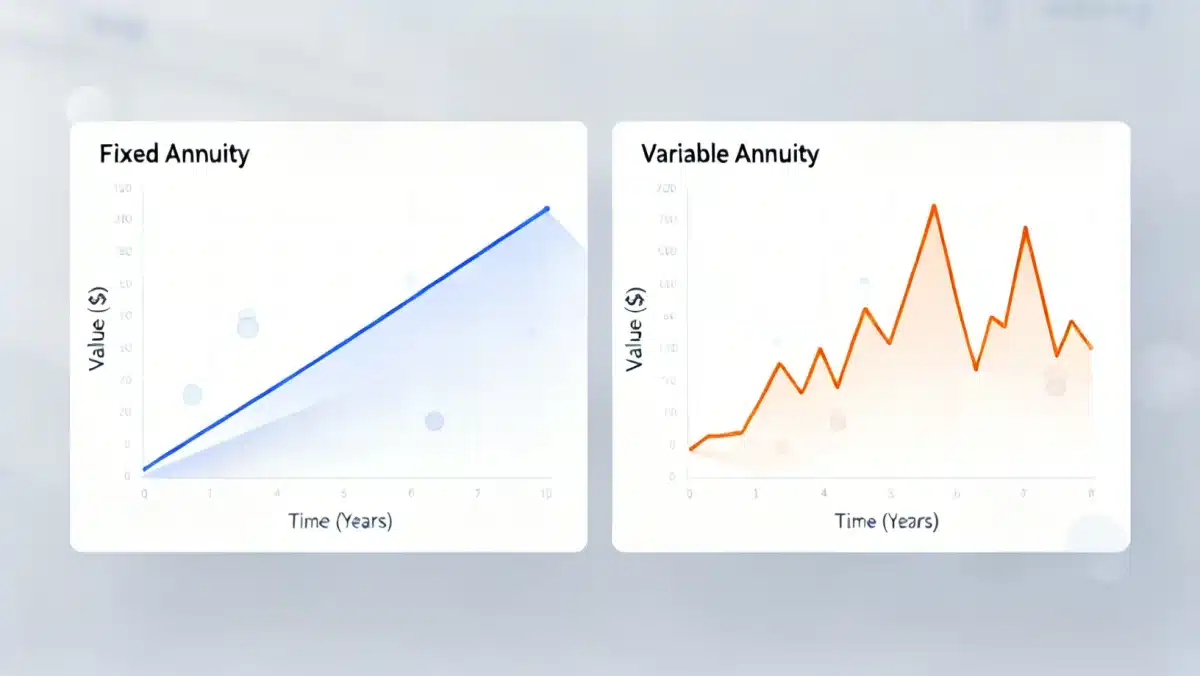
Fixed annuities are often lauded for their simplicity and the security they offer. When you invest in a fixed annuity, the insurance company guarantees a specific interest rate on your contributions for a set period. This means your money grows predictably, and you know exactly how much income you will receive when you begin taking payments.
In a volatile economic climate, the guaranteed returns of a fixed annuity can be highly attractive. They remove the guesswork from income planning, providing a clear path to retirement security. This makes them particularly appealing to individuals who prioritize capital preservation and stable income over potential high-risk, high-reward investments.
Key Characteristics of Fixed Annuities
Fixed annuities are characterized by their stability. The interest rate is declared upfront and guaranteed for a specified term, typically ranging from one to ten years. This guarantee applies to both the principal investment and the accumulated interest, ensuring your money is safe from market downturns. This makes them a conservative choice for retirement planning.
- Guaranteed Interest Rate: A fixed rate of return is set for a specific period.
- Principal Protection: Your initial investment is protected from market losses.
- Predictable Income: Future income payments are easily calculated and guaranteed.
- Lower Risk: Ideal for individuals with a low-risk tolerance.
Benefits of Fixed Annuities for Retirement Income
The primary benefit of fixed annuities is the assurance of a steady, predictable income stream. This certainty can be invaluable during retirement, covering essential living expenses and providing a baseline for your financial plan. They are also straightforward to understand, which can be a relief for those who prefer to avoid complex investment strategies. Additionally, the tax-deferred growth allows your money to compound more efficiently over time.
Variable Annuities: Growth Potential and Market Risk
Variable annuities stand in stark contrast to their fixed counterparts. Instead of a guaranteed interest rate, the growth of a variable annuity is tied directly to the performance of underlying investment options, often mutual funds. This means your account value and future income payments can fluctuate, offering the potential for higher returns but also carrying the risk of market losses.
For those comfortable with market fluctuations and seeking greater growth potential, variable annuities can be an attractive option. They allow investors to participate in market upside, which can lead to a larger retirement nest egg. However, it’s crucial to understand that with this potential comes increased risk, and careful consideration of market conditions and investment choices is paramount.
Exploring Variable Annuity Features
Variable annuities offer subaccounts, which are essentially investment portfolios similar to mutual funds. You choose how your premiums are allocated among these subaccounts, allowing for personalization based on your risk tolerance and investment objectives. The value of your annuity will then rise or fall with the performance of these chosen investments. Many variable annuities also offer optional riders, such as guaranteed minimum withdrawal benefits (GMWBs) or guaranteed minimum accumulation benefits (GMABs), which can provide some level of protection against market downturns, albeit often for an additional fee.
- Investment Subaccounts: Allows participation in market growth.
- Higher Growth Potential: Can achieve greater returns than fixed annuities.
- Market Risk: Account value can decrease with market downturns.
- Optional Riders: Can offer protection against losses for an extra cost.
Risks and Rewards of Variable Annuities
The main reward of a variable annuity is the potential for significant growth, which can lead to a larger income stream in retirement. If the underlying investments perform well, your annuity value can increase substantially. However, the primary risk is market volatility. If your chosen subaccounts perform poorly, your account value can decline, potentially reducing your future income. It’s also important to be aware of the fees associated with variable annuities, which can include mortality and expense charges, administrative fees, and subaccount management fees, all of which can impact your net returns.
Hybrid Annuities and Other Considerations for 2026
Beyond the traditional fixed and variable options, the annuity landscape in 2026 also includes hybrid products designed to blend features of both. Indexed annuities, for instance, offer returns linked to a market index (like the S&P 500) but with a cap on gains and a floor on losses, providing a middle ground between risk and reward. These innovative products aim to cater to a broader spectrum of investors, offering more tailored solutions for retirement income security.
When considering any annuity, it’s crucial to look beyond the immediate returns and understand the long-term implications, including fees, surrender charges, and the financial strength of the issuing insurance company. Due diligence and professional advice are indispensable in this complex financial arena.
Indexed Annuities: A Balanced Approach
Indexed annuities, also known as fixed indexed annuities (FIAs), bridge the gap between fixed and variable annuities. They offer a minimum guaranteed interest rate (like a fixed annuity) but also provide the opportunity to earn additional interest based on the performance of a specific market index. This means you can participate in some market gains without directly investing in the market, and your principal is protected from losses. However, gains are typically capped, meaning you won’t capture all of the market’s upside.
This type of annuity can be suitable for individuals who want more growth potential than a traditional fixed annuity but are uncomfortable with the full market risk of a variable annuity. They offer a level of principal protection while still allowing for some participation in market performance, making them a popular choice for those seeking a balance between security and growth.
Factors to Consider Before Purchasing an Annuity
Before committing to an annuity, several factors warrant careful consideration. First, assess your financial goals and risk tolerance. Are you looking for guaranteed income, growth potential, or a blend of both? Second, understand the fees associated with the annuity, as these can significantly impact your net returns. Third, evaluate the financial strength of the insurance company issuing the annuity; you want to ensure they will be able to fulfill their payment obligations in the future. Finally, consider the liquidity of the annuity, as withdrawals before a certain age or exceeding certain limits can incur surrender charges.
Tax Implications and Annuity Withdrawals
Understanding the tax implications of annuities is crucial for effective financial planning. While annuities offer tax-deferred growth, meaning you don’t pay taxes on earnings until you withdraw them, the withdrawals themselves are generally taxed as ordinary income. This can be a significant factor, especially for those in higher tax brackets during retirement.
Furthermore, if you take withdrawals before age 59½, you may be subject to a 10% federal tax penalty, in addition to regular income taxes. This penalty is designed to discourage using annuities for short-term savings. Careful planning around withdrawals can help minimize your tax burden and maximize the benefits of your annuity.
Tax-Deferred Growth Explained
One of the significant advantages of annuities is their tax-deferred growth. This means that any interest, dividends, or capital gains earned within your annuity account are not taxed until you begin taking withdrawals. This allows your money to compound more rapidly, as you are not losing a portion of your earnings to taxes each year. For long-term retirement planning, this compounding effect can be quite powerful, leading to a larger sum over time compared to taxable investments.
- No Annual Taxation: Earnings are not taxed until distributed.
- Compounding Effect: Allows your money to grow faster over time.
- Ordinary Income Tax: Withdrawals are typically taxed as ordinary income.
Navigating Annuity Withdrawals and Penalties
When it comes to withdrawing funds from your annuity, it’s essential to be aware of the rules and potential penalties. As mentioned, withdrawals before age 59½ are generally subject to a 10% federal tax penalty, in addition to ordinary income tax. Moreover, many annuities have surrender charges, which are fees applied if you withdraw more than a certain percentage of your annuity’s value during the initial years of the contract. These charges can be substantial and are designed to compensate the insurance company for the costs of issuing the annuity. Understanding the surrender charge schedule and planning your withdrawals accordingly can help you avoid unnecessary fees.
Choosing the Right Annuity for Your Retirement Goals
The decision between a fixed and variable annuity, or even a hybrid option, is a deeply personal one, contingent on your unique financial situation, risk tolerance, and retirement aspirations. There’s no one-size-fits-all answer, and what works for one individual might not be suitable for another. A thorough self-assessment of your financial health and future needs is the foundational step.
Ultimately, the goal is to create a robust retirement income strategy that provides both security and the potential for growth. By carefully weighing the pros and cons of each annuity type and seeking expert advice, you can make an informed decision that paves the way for a comfortable and worry-free retirement in 2026 and beyond.
Assessing Your Risk Tolerance
Your risk tolerance is perhaps the most critical factor in choosing an annuity. If you are risk-averse and prioritize capital preservation and guaranteed income, a fixed annuity is likely a better fit. You’ll sacrifice some potential growth for the certainty of a predictable return. Conversely, if you are comfortable with market fluctuations and are willing to accept potential losses for the chance of higher returns, a variable annuity might be more aligned with your investment philosophy. Indexed annuities offer a middle ground, providing some market participation with downside protection.
- Low Risk Tolerance: Favor fixed annuities for guaranteed returns.
- High Risk Tolerance: Consider variable annuities for growth potential.
- Moderate Risk Tolerance: Indexed annuities offer a balanced approach.
The Importance of Professional Financial Advice
Given the complexity and long-term commitment associated with annuities, seeking guidance from a qualified financial advisor is highly recommended. An advisor can help you assess your financial situation, understand the intricate details of different annuity products, and recommend the option that best fits your individual needs and goals. They can also help you navigate the tax implications and ensure the annuity integrates effectively with your overall retirement plan. Their expertise can be invaluable in making a decision that will impact your financial well-being for decades to come.
Future Trends in Annuities for 2026 and Beyond
The annuity market is not static; it continues to evolve with changing economic conditions, technological advancements, and consumer demands. In 2026, we can anticipate several key trends shaping the future of annuities, making them even more relevant for retirement income security. These trends include greater personalization, increased transparency, and the integration of digital tools to simplify the purchasing and management process.
As life expectancies increase and traditional pension plans become less common, annuities are poised to play an even more critical role in providing guaranteed income for retirees. Staying informed about these evolving trends will be essential for making the most of what annuities have to offer in the years to come.
Technological Advancements and Annuity Innovation
Technological advancements are driving significant innovation in the annuity space. Digital platforms are making it easier for consumers to research, compare, and even purchase annuities online. AI and data analytics are being used to create more personalized annuity products that better align with individual risk profiles and financial goals. We can expect to see more streamlined application processes, enhanced customer service through chatbots, and sophisticated tools for tracking annuity performance and income projections.
These innovations aim to make annuities more accessible and understandable to a broader audience, breaking down some of the traditional barriers to entry and fostering greater trust in these complex financial products. The focus is shifting towards user-friendly interfaces and clear communication of terms and conditions.
The Growing Demand for Hybrid and Personalized Annuities
As investors seek a balance between security and growth, the demand for hybrid annuities, such as indexed annuities, is expected to continue to rise. These products offer a compelling blend of features that appeal to a wide range of risk tolerances. Furthermore, there’s a growing trend towards highly personalized annuity solutions. Insurers are leveraging data to create customized contracts that can adapt to an individual’s changing life circumstances, such as health status, family needs, and evolving financial goals. This move towards personalization reflects a broader trend in financial services, where consumers expect products that are tailored to their specific situations rather than generic offerings.
| Key Aspect | Description |
|---|---|
| Fixed Annuities | Offer guaranteed interest rates and principal protection, ideal for predictable income. |
| Variable Annuities | Tied to market performance with growth potential, but also carry market risk. |
| Indexed Annuities | Hybrid products linking returns to market indices with caps and floors. |
| Tax Implications | Tax-deferred growth, but withdrawals are taxed as ordinary income and may incur penalties. |
Frequently Asked Questions About Annuities
Fixed annuities offer a guaranteed interest rate and predictable income, providing security and capital preservation. Variable annuities, conversely, tie their growth to market performance, offering higher growth potential but also exposing the investor to market risk and potential losses.
Annuities are not universally suitable for everyone. Their appropriateness depends on individual financial goals, risk tolerance, age, and existing retirement savings. While they offer guaranteed income, they also come with fees and liquidity constraints, making professional advice essential.
Annuity earnings grow tax-deferred, meaning you don’t pay taxes on them until you make withdrawals. Once withdrawals begin, the earnings portion is typically taxed as ordinary income. Withdrawals before age 59½ may also incur a 10% federal tax penalty.
Annuity fees can vary widely. Fixed annuities generally have lower fees, primarily surrender charges. Variable annuities can have higher fees, including mortality and expense charges, administrative fees, subaccount management fees, and costs for optional riders, which can impact overall returns.
Indexed annuities offer a blend of fixed and variable features. Their returns are linked to a market index, allowing for some market participation, but they also include principal protection and caps on potential gains, providing a balanced approach to risk and reward.
Conclusion
The journey to securing a comfortable retirement in 2026 involves thoughtful planning and informed decisions, particularly when considering financial instruments like annuities. Both fixed and variable annuities offer distinct advantages and disadvantages, catering to different risk appetites and financial objectives. Fixed annuities provide the comfort of predictability and guaranteed income, ideal for those who prioritize security. Variable annuities, while carrying market risk, offer the potential for greater growth, appealing to those willing to embrace market fluctuations for higher returns. Hybrid options like indexed annuities further broaden the spectrum of choices, providing a middle ground. Ultimately, the key lies in understanding your personal financial landscape, assessing your risk tolerance, and leveraging professional advice to select an annuity strategy that aligns perfectly with your long-term retirement goals, ensuring peace of mind and financial stability for years to come.
Autor